Working Of Derivative Markets image credit : google
Working Of Derivative Market
The subsidiaries market doesn’t manage fungible resources. All things being equal, it’s an optional market zeroed in on the unpredictability of capital business sectors and resources. As the name suggests, the monetary items exchanged this market are determinations of fundamental qualities. It’s likewise a market saturated with instability. In addition to the fact that there cost is change in the hidden resources, subsidiary trading likewise produces unpredictability.
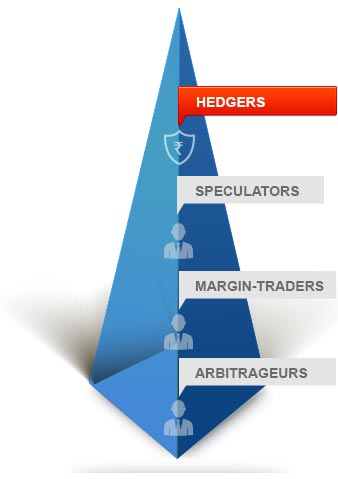
Subsidiaries are to a great extent seen as theoretical ventures. This market takes special care of hedgers, theorists, edge brokers and arbitrageurs. Subordinate financial backers normally have a particular justification for partaking in this market. For instance, one could purchase a fates agreement to fence against interest in a specific item. Arbitrageurs, then again, find cost errors all the more effectively because of subordinate cost instability.
To comprehend what makes the subordinates market tick and how it carries abundance to financial backers, read on.
What is a Derivative? A subsidiary is a sort of monetary agreement. Two gatherings meet up to settle on the hidden worth of a resource. They make terms encompassing that resource and its cost. Instead of the immediate trade of resources or capital, subsidiaries get their worth from the way of behaving of that fundamental resource. For instance, a prospects contract about soybeans doesn’t include trading soybeans. All things considered, it’s worth gets from the expense of trading soybeans.
At their center, subsidiaries endeavor to make a fair conversion scale for resources. Purchasers and merchants utilize subsidiary agreements as a fence against instability. However, subordinates themselves are currently likely to trading.
The Basic Functions of The Derivatives Market The function of the derivatives market is to hedge against volatility. This risk reduction fuels confidence in underlying capital markets, allowing companies to grow and prosper. The risk mitigation also brings some level of stability to the most important global financial markets. On top of it all, the derivatives market itself provides wealth-generating opportunities.
While it’s a speculative market, speculation is what gives derivatives value. Their links to a fungible asset give them a powerful benchmark, while allowing for larger participation from investors at cheaper prices.
Hedging includes taking a counterbalancing (that is, opposite) position in an interest to adjust any additions and misfortunes in the basic resource (the one that backs the subordinate). By taking a contrary position, hedgers are attempting to safeguard themselves against regardless, cost move-wise, with the resource — considering every contingency, in a manner of speaking.
The very smart arrangement in supporting is make one impact counterbalance another. It is a gamble killing methodology.
For instance, expect that an organization has some expertise in delivering gems and it has a significant request due in a half year, one that utilizes a ton of gold. The organization is stressed over the unpredictability of the gold market and accepts that gold costs might increment considerably sooner rather than later. To shield itself from this vulnerability, the organization could purchase a six-month prospects contract in gold. Along these lines, on the off chance that gold encounters a 10% cost increment, the fates agreement will secure in a value that will balance this addition.
As may be obvious, in spite of the fact that hedgers are shielded from any misfortunes, they are additionally confined from any additions. The portfolio is differentiated yet presented to deliberate gamble. Contingent upon an organization’s strategies and the sort of business it runs, it might decide to support against specific business tasks to decrease vacillations in its benefit and safeguard itself from any drawback risk.
To alleviate this gamble, the financial backer supports their portfolio by shorting fates contracts available and purchasing put choices against the long situations in the portfolio. Then again, on the off chance that an examiner sees what is happening, they might hope to short a trade exchanged reserve (ETF) and a prospects contract available to create a possible gain on a disadvantage move.
What Is a Dividend? A profit is the conveyance of a portion of an organization’s income to a class of its, still up in the air by the organization’s governing body. Normal investors of profit paying organizations are ordinarily qualified the length of they own the stock before the ex-profit date.
Profits might be paid out as money or as extra stock.
Figuring out Dividends Profits should be endorsed by the investors through their democratic privileges. In spite of the fact that cash profits are the most well-known, profits can likewise be given as portions of stock or other property. Alongside organizations, different shared assets and trade exchanged reserves (ETFs) likewise deliver profits.
A profit is a symbolic prize paid to the investors for their interest in an organization’s value, and it ordinarily starts from the organization’s net benefits. However the significant piece of the benefits is stayed with inside the as held profit — which address the cash to be utilized for the organization’s continuous and future business exercises — the rest of be distributed to the investors as a profit. On occasion, organizations might in any case make profit installments in any event, when they don’t create appropriate gains. They might do as such to keep up with their laid out history of making standard profit installments.
The top managerial staff can decide to give profits throughout different time periods and with various payout rates. Profits can be paid at a planned recurrence, like month to month, quarterly, or yearly. For instance, Walmart Inc. (WMT) and Unilever (UL) make normal quarterly profit payments.12
Organizations can likewise give non-repeating extraordinary profits, either separately or notwithstanding a booked profit. Joined Bancorp Inc. pronounced a dime for every offer exceptional profit on Feb. 18.2022.
A profit is the circulation of corporate benefits to qualified investors.
Profit installments and not entirely set in stone by an organization’s governing body.
Profits are installments made by freely recorded organizations to remunerate financial backers for placing their cash into the endeavor.
Declarations of profit payouts are for the most part joined by a corresponding increment or reduction in an organization’s stock cost.
Many organizations don’t deliver profits and on second thought hold income to be put once again into the organization.
What Is a Savings Account? A bank account is a store account that is intended to hold cash you don’t need or want to spend immediately. This is not quite the same as a financial records, which might permit you to compose checks or make buys and ATM withdrawals utilizing a charge card.
Bank accounts assist you with reserving cash away for explicit purposes and objectives. For instance, you might open an investment account to hold your secret stash, or you could set up an up front installment investment account in front of purchasing a home.
While investment accounts can offer helpful admittance to your cash, there are cutoff points to how frequently you can take advantage of one. Until as of late, Federal Reserve Board Regulation D has restricted you to six withdrawal exchanges each month.
What is speculation ? Speculation is the demonstration of trading resources that have an expanded opportunity of critical misfortunes. As speculative financial backers face more gamble, challenges’ an assumption to accomplish remarkable returns which — in the psyche of examiners — is pay for the outsized gamble.
Speculative financial backers will quite often be dynamic brokers. This implies that they’re endeavoring to beat the market normal and have to a greater extent an involved methodology, particularly during momentary swings on the lookout. This is a distinct difference to more inactive, purchase and-hold financial backers who by and large have to a greater extent a hand-off approach and don’t change their speculations as frequently.
The dynamic cycle for speculative financial backers can differ stunningly regarding complexity. A few theorists base their effective money management choices via online entertainment gatherings and images. This was, nevertheless is, the essential driver behind the flood in stock cost for organizations like GameStop and AMC Theaters. The two organizations were buried in monetary difficulty and at various focuses supposed to petition for financial protection before 2021.
Another model is Dogecoin, a digital money that saw monstrous spikes before this year when superstars like Mark Cuban and Elon Musk examined it on Twitter. After Elon Musk’s Saturday Night Live appearance on May 8, 2021, Dogecoin fell over 30%. A progression of Musk’s tweets were likewise faulted for the instability in Bitcoin when Tesla reported it would accept Bitcoin as a type of installment in February — just to switch that choice in May and choosing again that the organization will acknowledge Bitcoin in June. In April, the cost of Bitcoin was somewhat above $65,300 which is essentially more than the ongoing cost of Bitcoin at $33,600 at the hour of composing.
Different theorists base their choice on a “hunch” or market unpredictability, says Sabina Smailhodzic Lewis, CFP® and co-proprietor at Avant-Garde Wealth. “They’re searching for snippets of data that shout potential to them and hazard to every other person,” she added.
Essentially every market has a speculative corner, however in the present financial planning climate, digital currencies followed by NFTs (non-fungible tokens) are logical the most speculative.
The participants or players in the derivatives markets can be banks, foreign institutional investors, corporates, brokers, individuals, etc. All of them can be classified into four depending on their motives. They are hedgers, speculators, arbitrageurs, and spreaders. They have different motives.
Players in the Derivative Market
Hedgers: As already stated, hedging (covering against losses) is the prime reason which led to the emergence of derivatives. (Hedgers are those who enter into a derivative contract to cover the risk the motive of hedgers is not to make a profit but to reduce or eliminate risk. Thus, hedgers use derivatives to reduce or eliminate the risk associated with the price of an asset in the market. Take an example farmer growing wheat faces uncertainty about the price of his produce at the time of the harvest. Similarly, a flour mill needing wheat also faces uncertainty regarding the price of wheat. Both the farmer and flour mill owner can enter into a forward contract in this contract, the farmer agrees to sell his produce when harvested at a predetermined price to the flour mill. The farmer fears price fall while the flour mill owner fears price rise Both the parties face price risk. A forward contract would eliminate price risk for both parties. A forward contract is entered into with the objective of hedging against the price risk being faced by the farmer as well as the flour mill owner. Such participants in the derivative markets are called hedgers. In the example, the contract would be settled by the farmer delivering the wheat to the flour mill on the agreed date at an agreed price.
Functions of Hedgers: Important functions of hedgers may be outlined below
(a) To eliminate the price risk of contracting parties.
(b) To help to increase the trading volume.
(c) To attract more people into the derivatives market. 2 Speculators: Speculators are those who are willing to take risks. They take risks to make a profit from price fluctuations. Thus their main motive is to make money out of the risks assuming they accept risks in the expectation of a return. They forecast the future economic conditions. After this, they decide the position (long or short) to be taken that will yield a profit if the forecast is realized. They make forecasts about the prices and put their money in these forecasts. By taking positions, they are betting that a price would go up or they are betting that it would go down. Depending on their perceptions they may take long or short positions (this will be discussed later). Thus, their objective is to gain when the prices move as per their expectation. Let us take an example: The forward price in US dollars for a contract maturing in three months is 70 tone believes that three months later the price of US dollars would be 72, one would buy forward today and sell later from such a contract one can make a profit of 2 per dollar. On the contrary, if one believes the US dollar would depreciate to TGB in O month he would sell now and buy later Here, the actual delivery of the underlying e actual buying and selling) does not take place instead, the speculator gains from tw differential in price Speculation is a double-edged sword in means that there is a possibility of making a profit (if the prediction is correct) or incurring a loss (if the prediction is incorrect.
There are three types of speculators Based on duration (a) Scalpers (hold for a very short time-in minute). (b) Day traders (one trading day). (c) Position traders (long period week, month a year). Speculators perform an extremely important function. They provide liquidity to the market Without speculators in the market, it would be difficult for the hedgers to find matching parties. Similarly, without speculators, the hedge would not be efficient. The presentence of speculators make the market competitive reduces transaction costs and expands the market size. They assume risk and serve the needs of hedgers in short, without speculators, the derivative market probably would never exist. However, some people think of speculators as gamblers, they earn too much money and provide no economic value Functions of Speculators The functions of speculators are as follows: (al To contribute to market efficiency.
(b) To conduct fundamental analysis and/or technical analysis and collect information to predict price movements.
(c) To provide liquidity to the market.
(d) To find matching parties for the contract and help hedgers.
(e) To make the market competitive, reduce transaction costs and expand the market size.
(f) To redtransactionionn cost (g) To expand market size
Arbitrageurs: Arbitrage is the process of simultaneous purchase of securities or derivatives in one market at a low price and sale of the same in another market at a relatively higher price The traders who are engaged in arbitrage are known as arbitrageurs. The arbitrageurs purchase securities in one market where the price is low and sell them in another market where the price is comparatively higher. These are done when the same securities are being quoted at different prices in two markets. The motive of arbitrageur is to make prof from the difference in prices of securities prevailing in the two markets. are, constantly touring the prices of different assets to make a profit that arises from the mispricing of products. The most common example of arbitrage is the price difference that may be prevailing in rent stock markets For example, the share price of 58 is 650 in NSE and 7 640 in BSE. Then the arbitrageur will buy at 856 and sell at NSE simultaneously and pocket the difference of 10 per share is aim is to make skies profit by simultaneously entering into transactions in two or more market imperfections. These imperfections cannot exist for a long time. These are extremely short-lived. The arbitrageur cashes upon these short-fived opportunities.
Arbitrageurs add competitiveness to the market. They help in the price discovery process. They provide a link between the derivative market and the cash market Functions of Arbitrageurs The functions of arbitrageurs may be summarised below (a) To provide a link between the derivative market and the cash market by synchronizing the prices in the two.
(b) To make markets efficient by taking riskless positions in different markets.
(c) To restore the balance and consistency among different markets.
(d) To render competitiveness to the market and help in the price discovery process.
4 Spreaders: Spreaders are the fourth category of traders in the derivatives market Spreading is a specific trading activity in which an offsetting position is involved (ie, simultaneous long and short positions on the same derivative) A spreader is a person who believes in lower expected return at the reduced risk.
What is a Current Account? Current records are a regular need for the vast majority — they’re where you keep your cash to take care of bills along with any extra burning through cash. To move cash into your record or the other way around, they’ll probably request your bank subtleties by means of bank move — that could be through web based banking or via telephone.
Your ongoing record is additionally where any pay, for example, your compensation goes when it lands in your ledger. A great many people deal with their ongoing record somehow each and every day; whether that is pulling out cash from an ATM (cash machine), utilizing a charge card at a shop or café, or essentially checking their equilibrium on the web.
Boat Bassheads 100 Wired in Ear Earphones with Mic (Mint Green)











You must be logged in to post a comment.