METHODS OF INVESTMENT

Investment


 Investment Methods

There are some investment methods to invest. 

      investment methods

  • Bank deposit
  • Post office deposit 
  • Company deposit 
  • Provident fund deposit 
  • Commodities 
  • Real estate 
  • Bonds or debentures 
  • Government securities 
  • Money market instruments

These instruments are very beneficial to earn a extra income. 

  • Bank Deposit 

Bank deposits are very good to eran extra income.  Through Bank deposit the banks are provide an interest to the investors. Ther are several bank deposit like fixed deposit, recurring deposit, and savings bank deposit.

  • Post office Deposit

Tis similar to savings bank deposit. There are many schemes to investors to invest. The important scheme is Post Office Monthly Income Scheme ( POMIS). In POMIS the investor can earn an income every month form his investment instead of getting a lum sum amount on maturity.

  • Company Deposit

The deposit placed by investors with the companies for   fixed period of time called company deposit.

  • ·        Provident fund deposit

 Provident and deposit Two are two types public Provident fund and employees Provident fund

  • ·        Public Provident fund.

The Government of India put forward the public Provident scheme to ensure that everyone could have some funds available in their old age.

  • ·        Employees Provident fund

Employees Provident fund is available only two salaried employees. Employees prudent fund is compulsory if the investor is an employee.

  • ·        Commodities

These are another type of investment method. Metals petroleum products and agricultural products Are the main  commodities.

  • ·        Real estate

By real estate we mean land and everything  permanently attached to it like trees, buildings etc. real estate investment incurs high level of transaction costs.

  • ·        Bonds or debentures

Bonds or debentures are Long term debt instruments. Debentures are issued by private companies but bonds are issued by public companies.

  • ·        Government securities

Debt securities issued by the central government state government and quasi government  agencies are  called government securities.

  • ·        money market instruments

the debt instruments, which have a maturity off less than one year it is called money market instruments.
//ws-in.amazon-adsystem.com/widgets/q?ServiceVersion=20070822&OneJS=1&Operation=GetAdHtml&MarketPlace=IN&source=ss&ref=as_ss_li_til&ad_type=product_link&tracking_id=shopstore072-21&language=en_IN&marketplace=amazon&region=IN&placement=B009X7RO3M&asins=B009X7RO3M&linkId=84ea7e7f74fce86b2fce423844977268&show_border=true&link_opens_in_new_window=truehttps://www.amazon.in/Forest-Essentials-Revitalising-Kashmiri-Walnut/dp/B009X7RO3M/ref=sr_1_1_sspa?qid=1641223234&s=luxury-beauty&sr=1-1-spons&psc=1&spLa=ZW5jcnlwdGVkUXVhbGlmaWVyPUEzQUhIRFlNVDVTRVhBJmVuY3J5cHRlZElkPUEwMzcwNzI0M0hUMjJNMUdMMENBNyZlbmNyeXB0ZWRBZElkPUEwNTkyOTY3WkJTVlo2SlU4UVozJndpZGdldE5hbWU9c3BfYXRmX2Jyb3dzZSZhY3Rpb249Y2xpY2tSZWRpcmVjdCZkb05vdExvZ0NsaWNrPXRydWU=#:~:text=%3Ciframe%20style%3D%22width,link_opens_in_new_window%3Dtrue%22%3E%3C/iframe%3E

FINANCIAL DERIVATIVES

Derivatives

 Derivatives

We are exposed to many risks in our day-to-day life. nobody can predict what will happen in the next moment. There may be an accident calamity theft lost due to some other courses etc. similarly, Business is exposed to many kinds of risks at all times. Risks may arise due to unexpected changes in the demand of a product, prices of raw materials may increase labor race rates may go up, etc. Some type of loss is not insurable. So certain financial devices or instruments are available in the market to reduce or transfer the risks. These financial instruments are known as derivatives. Thus the derivatives are tools that help firms in reducing risk.

What are Derivatives?

In financial markets and foreign exchange markets, there are fluctuations. Fluctuations add expose the parties to risk. Hence, parties would like to hedge their risks for reducing the risk some financial instruments have been developed recently. These financial instruments are known as the datives. When the firm reduces its risk exposure by using derivatives it is known as hedging. Hedging offsets the firm’s risk. The underlying principle behind derivatives is that a risk-averse individual is willing to pay a price to transfer the risk and an individual with higher risk-taking is willing to bear the risk for a price.

According to Robert L. Mconald, “A derivative is simply a financial instrument  (or even more simply an agreement between two parties) that has a value determined by the price of something else”.

 in normal trading, an asset is bought and sold. But in derivatives trading, the asset itself is not traded but the right to buy or sell is traded. Thus a derivative instrument does not directly result in a trade. It gives a right to a person.

Derivatives are contracts that are written between two p ties for easily marketable assets. But we do see are also known as before delivery instruments or deferred payment instruments.

A very simple example of derivatives is curd. It is a derivative of milk. Milk is the underlying asset. The price of curd depends upon the price of milk. The price of milk in turn depends upon the demand and supply of milk.

Characteristics of  derivatives

Underlying asset: each derivative product has an underlying asset

Predefined period: All derivative instruments Harry breathed armed life at the end of the fix-it video the derivative instruments are closed out an inward and exchange of payment.

Secondary market instrument: Derivative instruments are mostly secondary market instruments so that we are not useful in mobilizing fresh capital by the companies.

Contract fulfillment: Every derivative contract it’s between two parties. The contract is to be fulfilled in  future. T  period of the contract is determined by the nature of the contract.

No independent value: Every derivative instrument have no independent value. the value of a derivative instrument is dependent upon the price movement of the underlying asset.

Derivative instruments are good in listing. But it has some negative sides because it is a secondary market instrument so it is not suitable for companies. But one of the main advantages of derivatives is it has a minimum initial investment amount. So it is good for individuals.

Follow on LinkedIn 

//ws-in.amazon-adsystem.com/widgets/q?ServiceVersion=20070822&OneJS=1&Operation=GetAdHtml&MarketPlace=IN&source=ss&ref=as_ss_li_til&ad_type=product_link&tracking_id=shopstore072-21&language=en_IN&marketplace=amazon®ion=IN&placement=B009X7RO3M&asins=B009X7RO3M&linkId=84ea7e7f74fce86b2fce423844977268&show_border=true&link_opens_in_new_window=truehttps://www.amazon.in/Forest-Essentials-Revitalising-Kashmiri-Walnut/dp/B009X7RO3M/ref=sr_1_1_sspa?qid=1641223234&s=luxury-beauty&sr=1-1-spons&psc=1&spLa=ZW5jcnlwdGVkUXVhbGlmaWVyPUEzQUhIRFlNVDVTRVhBJmVuY3J5cHRlZElkPUEwMzcwNzI0M0hUMjJNMUdMMENBNyZlbmNyeXB0ZWRBZElkPUEwNTkyOTY3WkJTVlo2SlU4UVozJndpZGdldE5hbWU9c3BfYXRmX2Jyb3dzZSZhY3Rpb249Y2xpY2tSZWRpcmVjdCZkb05vdExvZ0NsaWNrPXRydWU=#:~:text=%3Ciframe%20style%3D%22width,link_opens_in_new_window%3Dtrue%22%3E%3C/iframe%3E


WORKING OF SWING TRADING

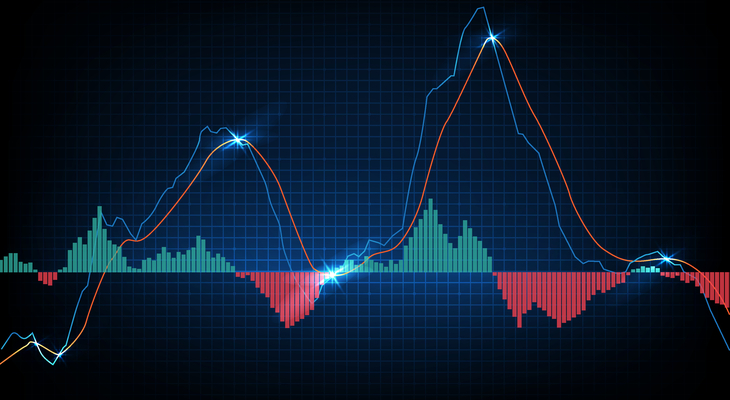
Graphical representation of Swing Trading

Swing Trading : What it is & How it works

Swing exchanging is a momentary venture technique expecting to benefit from swings in a resource’s cost. While this way of exchanging can be productive, it likewise has its downsides.

What Is Swing Trading?


Swing exchanging is an exchanging system that pursues momentary directions to accomplish gains in a stock or other speculation security. As opposed to endeavoring to get in and out of an exchange a day, or contribute as long as possible, a swing exchange will commonly occur throughout over one day and up to a couple of months.

How Swing Trading Works


The most common way of swing exchanging includes catching a piece of a normal cost move north of a couple of days or a little while, as opposed to bigger increases throughout longer timeframes. To do this, a swing merchant might focus on a specific cost and use a stop misfortune request for execution. The broker may likewise utilize specialized examination to expect cost moves in order to procure benefit.

Subsequent to acknowledging benefit from an expected cost development, the swing broker continues on to distinguish the following an open door. The thought behind swing exchanging is to catch numerous little to medium successes, which can amount to one major absolute return.

Swing Trading Strategies


Swing exchanging systems fundamentally utilize the utilization of specialized examination, which endeavors to anticipate future cost developments from a speculation security’s verifiable action. Swing brokers might look at a shift in cost course, exchange on shortcoming, or search for specific specialized designs.

Instances of swing exchanging techniques are:

• Shift in cost course: After the market has affirmed a shift in course in value, the swing merchant might purchase on anticipated forward movement.
Exchange on shortcoming, sell on strength: If a speculation is exchanging on the lower end of its exchanging channel, the swing dealer might purchase on the apparent shortcoming.
• Specialized designs: Swing brokers experienced in specialized examination might utilize explicit multi-day diagram designs for prompts to enter and leave positions.
• Swing Trading Tools
Brokers, including swing merchants, may utilize graphs and apparatuses, for example, moving midpoints, energy pointers, candle diagrams, and market feeling pointers. Merchants may likewise utilize helps, like stock diagrams, outlining programming, specialized investigation sites, and exchanging books, magazines, and web journals. Looking for Alpha’s high level graphs (controlled by TradingView) likewise offer different specialized examination apparatuses which such brokers might use all the while.

Professionals and Cons of Swing Trading
Swing exchanging, as different styles of exchanging, enjoys its benefits and hindrances. On the off chance that great open doors can be distinguished, and misfortunes can be limited with fruitful stop misfortune procedures, swing exchanging can be productive. However, swing exchanging has its exceptional dangers and downsides.

Professionals of Swing Trading


• Benefit potential: A merchant might possibly amplify gains by exploiting transient value development, or swings in cost.
•Effortlessness: Swing exchanging can take less time than day exchanging and it very well may be more straightforward than money management that includes essential examination.
Cons of Swing Trading


• Market timing: Capital business sectors will quite often act all the more haphazardly temporarily, contrasted with the long haul, which makes the planning of the swing exchanges seriously testing.
Market risk: Swing exchanging can enhance market risk, because of the general capriciousness of capital business sectors temporarily.
Swing Trading Example


For an instance of swing exchanging, suppose a financial backer has been following execution of a generally exchanged stock ETF. The financial backer notices the presentation in a bar diagram and the pattern has shown a vertical development inside an exchanging channel, with bottoms that will more often than not be short and sharp.

To set up the swing exchange, the financial backer purchases portions of the ETF and submits a defensive stop misfortune request at a cost somewhat over the new base cost patterns. The swing broker then, at that point, screens the ETF with the arrangement of leaving the exchange close to the upper channel line. When the cost arrives at the arranged leave point, the swing broker offers the portions of the ETF to secure in gains.

Swing Trading versus Day Trading


The principal distinction between swing exchanging and day exchanging is the holding time frame: swing exchanging may go from a few days to half a month, while day exchanging positions are regularly restricted to a solitary day. Different contrasts are related with position sizes, utilization of edge, exchanging recurrence, and expenses.

Contrasts between swing exchanging and day exchanging are:

• Holding period: Positions for swing exchanges are frequently held for a few days and as long as half a month, while day exchanging positions are executed inside a solitary exchanging day.
• Position size: Because of the short-term risk, swing merchants frequently take on more modest situations than informal investors.
• Utilization of edge: Swing merchants might use edge or influence of half, though informal investors are restricted to 25%, as set by FINRA.
• Exchanging recurrence: Swing exchanging commonly requires less regular exchanges than day exchanging.
• Costs: Primarily because of lower exchanging recurrence, swing exchanging for the most part costs not as much as day exchanging.
Primary concern
Swing exchanging can be a productive and available way for a financial backer to get into exchanging. Be that as it may, contrasted with standard stock or ETF contributing, the general intricacy associated with a swing exchanging methodology isn’t appropriate for novice financial backers.

SWING TRADING

What is Swing Trading?: Definition and Tips

Swing exchanging is a speculation technique that plans to exploit momentary value developments to create easy gains. While it capacities with different resources, swing exchanging is remarkably well known while exchanging digital currencies. Swing exchanging is likewise not the same as day exchanging, as typically positions are held for longer periods. While exchanging digital forms of money, merchants frequently utilize specialized investigation to distinguish expected section and leave focuses. In this article, we will characterize swing exchanging and offer a few hints on the best way to begin.

What is swing exchanging?


Swing exchanging is a venture technique that expects to benefit from transient value developments to create easy gains. While it capacities with different resources, swing exchanging is exceptionally famous while exchanging digital forms of money. It includes taking a long or short situation in a resource and holding it for days or weeks, to exploit cost swings. This is finished with stocks, forex matches, wares, or digital currencies.

Numerous dealers utilize specialized examination while swing exchanging, as it can assist with recognizing possible section and leave focuses. Swing exchanging is a famous speculation system for a couple of reasons. In the first place, it is finished with an assortment of resources. Whether it’s stocks, forex, items, or digital forms of money, you can utilize swing exchanging to suit your requirements. Second, swing exchanging can be a moderately generally safe method for exchanging. Positions are for a brief period. Finally, exchanges depend on cost swings. This kind of exchanging can be productive even in business sectors that are moving up or down.

ApeCoin’s (APE) negative unpredictability this week. Incredible chance to swing exchange.
Assuming you’re new to swing exchanging, we suggest beginning with a demo account first. This will permit you to work on exchanging without gambling any genuine cash. When you feel certain, you can then begin live exchanging with a modest quantity of capital. With regards to picking a specialist, make a point to choose one that offers a decent determination of resources as well as specialized examination devices.

You will likewise have to settle on a swing exchange framework. There are various frameworks out there, so doing your examination and find one that suits your requirements and hazard tolerance is significant. Swing exchanging can be an incredible method for creating speedy gains. Nonetheless, it’s memorable’s essential that like some other sort of exchanging, there are gambles included. Prior to getting everything rolling, make certain to teach yourself on the dangers and likely compensations of swing exchanging. Assuming that you’re keen on evaluating swing exchanging, there are a couple of things to remember.

In the first place, have sensible assumptions regarding your benefits. Swing exchanging isn’t an easy money scam, and it might require some investment before you see any huge outcomes. Second, feel free to take a few misfortunes. Only one out of every odd exchange is a victor. However long you adhere to your technique and keep your misfortunes little, you can produce steady benefits. At last, have some good times! Swing exchanging can be an incredible method for bringing in cash, but on the other hand it’s memorable’s vital that it’s not worth forfeiting your emotional wellness. Assuming you’re feeling worried or consumed, enjoy some time off from exchanging. Attempt once more while feeling invigorated.

Instances of swing exchange frameworks
Swing exchanging works best when markets are neither too unpredictable nor excessively calm. For instance, a stock swinging all over somewhere in the range of $20 and $30 per share is great for swing merchants. Interestingly, a stock continually fluctuating somewhere in the range of $15 and $20 per offer might be excessively unpredictable to produce reliable benefits.

Likewise, a stock that never moves in excess of a couple of pennies each day is probable excessively quiet. With monetary standards, swing exchanging can be beneficial in moving and range-bound markets. Nonetheless, it could be hard to track down section and leave focuses in a going business sector. Swing exchanging can be productive in both moving and range-bound markets.

What are the inconveniences of swing exchanging?


While swing exchanging can be an extraordinary method for bringing in cash, there are possible disadvantages to consider. To begin with, on the grounds that you’re standing firm on your footings for a more limited time frame, you might pass up a portion of the more extended term benefits you could produce assuming you stand firm on footholds for a more extended period. Second, swing exchanging can be more dangerous than different kinds of exchanging because of the potential for more extensive cost swings. Furthermore, ultimately, in light of the fact that you’re continually opening and shutting exchanges, you might cause more exchange costs than somebody who is basically purchasing and standing firm on their situations. The following are five burdens of swing exchanging:

You might pass up a portion of the more drawn out term benefits
Swing exchanging can be less secure than different kinds of exchanging
More exchange costs
Potential for more extensive cost swings
May not suit everybody’s character type (for example risk-opposed financial backers) .

What are the upsides of swing exchanging?


Swing exchanging can be an extraordinary method for bringing in cash, but on the other hand it’s memorable’s critical that it’s not worth forfeiting. In the event that you’re feeling worried or consumed, have some time off from exchanging and return while you’re feeling revived.

A few possible benefits of swing exchanging.

The capacity to create speedy gains
The valuable chance to exchange unpredictable business sectors
The chance of procuring huge benefits
The adaptability to exchange around your timetable
The opportunity to find out about various business sectors and resource classes
As may be obvious, there are a few benefits of swing exchanging. Assuming this is something that intrigues you, the following are a couple of valuable tips to assist you with beginning:

Track down a framework that works for you: There are various swing exchange frameworks. Do your examination and find one that suits your necessities and hazard resilience.

Begin with little position sizes: When you’re initially beginning, it means quite a bit to not gamble an excess of capital on each exchange. Position size is the quantity of offers or agreements that you’re exchanging. When in doubt, you ought to never gamble beyond what you can bear to lose.

Have sensible assumptions: Swing exchanging isn’t a pyramid scheme. It requires investment, persistence, and train to succeed. Try not to hope to make a large number of dollars short-term.

Be ready to take a few misfortunes: Not each exchange will be a victor. That is only the idea of the business sectors. The key is to keep your misfortunes little and deal with your gamble.

Have a good time: Swing exchanging can be an incredible method for bringing in cash, but on the other hand it’s memorable’s essential that it’s not worth forfeiting your psychological wellness simultaneously. On the off chance that you’re feeling worried or consumed, enjoy some time off from exchanging and return while you’re feeling revived.

Is it worth the effort?: Swing exchanging crypto


Anyway, is swing exchanging worth the effort? That relies upon your objectives, risk resilience, and exchanging style. In the event that you’re hoping to create speedy gains in unstable business sectors, swing exchanging might be ideal for you. Notwithstanding, on the off chance that you’re risk-unwilling or not intrigued by the pressure of consistent observing and navigation, then, at that point, swing exchanging may not be ideal for you. Eventually, the most effective way to find out is to try different things with various methodologies and see what turns out best for you.

An effective method for exploring different avenues regarding swing exchanging techniques is with YouHodler’s Multi HODL apparatus. Multi HODL permits you to long or short any digital currency utilizing an assortment of multiplier levels. Set your edge call and take benefit levels for greater adaptability. The best part is that it’s not difficult to utilize and helpful for all experience levels.

The market is extremely unpredictable at the present time so use Multi HODL to actuate your crypto and benefit from this instability. Each swing is a change to benefit.

DEPOSIT DREAM : PERSONAL FINANCE

Personal Finance :- Deposit Dream

Can we just be real… the loan costs on fixed stores have been unappetising for at some point now. The macroeconomic climate required low loan fees. That is the very thing we have over the most recent two years. The expansion rate is floating north of 6%. In any case, FDs with tenors around one to two years return around 4.9-5.1 percent before charge. After charge, the genuine returns might be not exactly – 3%.

In such a situation, the store isn’t developing your cash. It’s making it more modest. Rates have begun crawling up at this point. Be that as it may, the additions are minor. Genuine returns might stay negative assuming that expansion keeps on solidifying.

This makes significant troubles for those ward on revenue income. For senior residents their advantage livelihoods have gotten more modest and their living expenses have considerably gone up. How would it be a good idea for them to respond?

Long V/S short tenors

With government bank stores, the best rates are commonly for tenors over five years. The rates on offer as of now from the biggest government banks range from 4.9 percent to 5.50 percent.

For instance, Canara Bank offers 5.50 percent on tenors somewhere in the range of five and 10 years, and 6 percent for senior for residents.

With more limited tenors as long as three years, the rates are ordinarily between 4.9 percent and 5.3 percent. A few banks go up to 5.45 percent. Somewhere else, the mail center gives time stores at 5.5 percent for one, two, and three years, yet the most noteworthy pace of 6.7 percent is for quite some time.

With private banks, it’s a similar story. The more drawn out tenors rates go as high as 6.25 percent to 6.5 percent. For instance, IndusInd Bank publicizes paces of 6.5 percent on tenors between two years and under 61 months, and 7 percent for senior residents. Many banks go above 5.75 percent. They anticipate that you should secure to longer tenors for higher rates. Be that as it may, the point remains. Indeed, even the most elevated rates may not be enough in the ongoing situation. What’s the arrangement?

There’s an unmistakable hole between the paces of private banks and government banks. Assuming you are searching for preferable returns over 5%, you might need to consider keeping at private banks.

Second, while longer tenors offer better rates, you may not be guaranteed to need to secure to them at this moment. Rates will begin increasing soon. It very well might be more shrewd to stay in more limited tenors, even with lower rates. Then, as rates rise, secure to them. As things stand, almost certainly, 2022 will have numerous rate climbs.

Little V/S Huge banks

The other split you will find in the rates is between huge banks and little banks. Enormous banks are viewed as more secure, present lower dangers to the contributor, and, in this manner, offer lower rates than more modest banks.

This remains constant whether the bank is private or government. For instance, HDFC and ICICI’s tenors over five years publicize a pace of 5.45 percent, and 6.35 percent for senior residents. This is relatively close from SBI’s rates for a similar tenor: 5.5 percent and 6.3 percent.

The dangers regardless, more modest banks additionally need to develop their business. Accordingly, they give higher rates to draw in new contributors.

The best rates are normally presented by little money banks. For instance, on the three-year tenor, Suryoday Small Finance Bank offers 7%, with 7.5 percent for senior residents. While picking any little bank for stores, clients should be aware of the bank’s security. For example, all banks whose licenses were as of late dropped by the RBI in light of multiple factors were helpful banks. Not all little banks are hazardous. You just have to avoid the ones with clear difficult situations like a high proportion of terrible obligations. The security net you can give yourself is storing something like Rs 5 lakh with any little bank. This is the breaking point to which the RBI’s protection store plan would cover you, should your bank come up short.

Bank V/S Organizations

In the event that you are subject to intrigue pay, you can’t overlook organization stores. Critical to pick profoundly appraised organizations can take care of your advantage and head sooner rather than later. In such manner, AAA-appraised organization FDs are your smartest choice. For instance, HDFC Ltd promoted a unique FD pace of 6.8 percent for a long time, with 25 extra premise focuses for senior residents.

To face higher challenges for higher prizes, you should go with organizations with lower evaluations. For instance, Shriram City offers a term store with an AA rating at 7.75 percent for quite some time, with a pace of 8.05 percent for senior residents. While putting resources into organization stores, align your openness as per chances. Recollect that organization stores don’t have the advantage of store protection that bank stores have. The evaluations are a valuable method for surveying credit risk.

For higher long haul genuine returns, think about looking past fixed stores. Market instruments, for example, values, common assets, security assets, and state, focal government, and corporate securities are ways of getting better returns. Bank stores, eventually, are instruments of reserve funds and produce reserve funds like returns. For expansion beating returns, you really want to go to the business sectors.

Investment Environment

Investment EnvironmentWhat is Investment? Investment means conversion of cash or money into a monetary asset or a claim on future money for a return. Investment is the parking at least one year in an investment avenue to get return in the future.There are some financial instruments to invest the money. The investor can buy or sell securities i.e financial instruments according to his choice.The financial instruments may be creditorship securities or ownership securities.There is a market Tu to buy or sell the securities. The market may be money market or capital market. Only through the market we can buy or sell securities.

Creditorship SecuritiesCreditor ship securities include public debt instruments, private debt instruments and special debt instruments.

Public debt instruments are debt instrumnets which are issued by the Governmet for long and short periods. These instruments are risk free instruments. 

Private debt instruments are debt instruments which are issued by the Private sector business firms incorporated under the Indian Companies Act, 1956. These instruments are generally secured by a mortgage on fixed assets of the company. 

Special debt instruments are debt instruments which are issued by the Public Sectir Units (PSU) for long term and short term. In long term, the instruments are issued in the form if bonds and in short term the instruments are issued in the form of certificate of deposit. In this type of instruments tax incentivesare given to the investors. 

Ownership SecuritiesOwnership Securities are called ‘Equities’ because the investor incmvest in ownership securities will get the right to share the future prospects and residual profits. Ownership Securities an be acquired directly or indirectly through a hybrid instrument called preference shares.  Preference shares are less popular instrument. It combines the features of debt as well as equity this us why preference shares called ‘hybrid security’.  A presence share holder gets preference over equity share holder with regard of dividend, redemption, participation, etc. 

//ws-in.amazon-adsystem.com/widgets/q?ServiceVersion=20070822&OneJS=1&Operation=GetAdHtml&MarketPlace=IN&source=ac&ref=tf_til&ad_type=product_link&tracking_id=shopstore072-21&marketplace=amazon&region=IN&placement=B09NM8S1V4&asins=B09NM8S1V4&linkId=e4feadcf222c1756d4ee5619bf39f745&show_border=true&link_opens_in_new_window=false&price_color=333333&title_color=0066c0&bg_color=ffffff

Exchange-Traded Derivatives & OTC Derivatives


Based on the trading mechanism, the derivatives can be classified into two

  1. Exchange-traded derivatives. 
  2. Over-the-counter derivatives.

Now we can check out the differences between Exchange-traded Derivatives and OTC Derivatives. 

Exchange-traded derivatives.

  • Exchange-traded derivatives do not have any counterparty risk.
  • In this type of did, we do this the transaction goes are less.
  • Prices of exchange-traded derivatives are publicly available.
  • These are contracts that trade on an organized exchange.
  • In this the market traders do not know exchange-traded derivatives, the contracts have standardized terms set by the exchange or the clearinghouse.


OTC derivatives

  • In OTC derivatives counterparty risk is present.
  • in this transaction costs are more.
  • prices of OTC derivatives are not publicly available it’s kept confidential.
  • Over the counter, derivatives result from agreements between two parties.
  • in this, the market players are known to each other.
  • In OTC derivatives contracts are customized to the requirements of the counterparty.

We can choose any type of derivatives according to our interests.

//ws-in.amazon-adsystem.com/widgets/q?ServiceVersion=20070822&OneJS=1&Operation=GetAdHtml&MarketPlace=IN&source=ss&ref=as_ss_li_til&ad_type=product_link&tracking_id=shopstore072-21&language=en_IN&marketplace=amazon&region=IN&placement=B08J6YZZ14&asins=B08J6YZZ14&linkId=1cabcb7706da1e0b1aaae83b36302ce5&show_border=true&link_opens_in_new_window=true


Individual advances or Visas: Which is better for momentary objectives?

With the consistently advancing credit market, the developing entrance of monetary administrations, the sharp flood in new-to-credit clients close by aggressive goals of recent college grads, and expanded openness because of more extensive computerized consideration, people are promptly applying for credit to satisfy different targets.

Mastercard V/S Personal Loan

A Mastercard or an individual credit can really fill the cash deficit. Nonetheless, the decision of credit relies completely upon the reimbursement limit, the prerequisite of assets, and the reason for which the additional money is required.
Both Mastercards and individual advances are unstable credit offices, however their designs are unique. A Visa offers spinning credit that can be used again and again, gave the bills are paid prior to the due date.
Then again, an individual credit works with the borrower with a singular amount that can be utilized quiet and can be reimbursed by a timetable concurred between the borrower and moneylender prior to endorsing the advance sum.

Calculative Comparison

Consider a person who needs Rs 5 lakh for an unfamiliar excursion, purchasing a premium cell phone and minor fixes at home. The individual’s month to month pay is Rs 80,000. Allow us to comprehend the exchanges with the use of a charge card.
With a Visa, one can book the flight tickets and lodging reservations, purchase the cell phone and pay for the material expected for home improvement.
A Mastercard additionally permits exchanges to be parted into compared regularly scheduled payments (EMIs) that will be charged with the occasional Visa cycles and can be along these lines paid easily. Many banks permit huge ticket exchanges to be parted into more modest EMIs without imposing a handling charge.
For instance, the aggregate sum of inn reservations and flight ticket appointments for a 6-night and 7-day unfamiliar outing came in at Rs 2.5 lakh. The sum can be changed over into a two year EMI structure at the pace of 14%, following which the sum to be reimbursed is Rs 12,003 consistently.
Besides, the cell phone was purchased for Rs 90,000 and the sum changed over into 12 EMIs at the pace of 12%, which is a regularly scheduled installment of Rs 7,996.
In conclusion, restroom fittings and tiles were bought for Rs 1.6 lakh, which was changed over into 12 EMIs at the pace of 14%, and the month to month EMIs ended up being Rs 14,366.
The absolute EMIs for a month amount to Rs 34,365 for the main year and Rs 12,003 for the subsequent year. The complete compensation out following two years would be Rs 5,56,416, of which the interest outgo is Rs 56,416.
Albeit individual credit financing costs differ from 10% to 20 percent, in a situation where a singular takes an individual advance of Rs 5 lakh at the pace of 14% for a very long time, the EMIs came in at Rs 24,006. For this situation, the complete payout would be Rs 5,76,144 and the interest outgo is Rs 76,144.
The premium on the individual advance is higher than that on a Visa as how much Rs 5 lakh is reimbursed in two years, while the charge card permits the exchange of purchasing a cell phone to be cut into 12 EMIs at a moderately lower rate.
Such plans are impractical with an individual advance, which can be for a little while years or a commonly concurred residency. However, it can’t be a year for Rs 2 lakh and two years for Rs 3 lakh.

Which credit line to choose?

Choosing between the two choices relies upon the reimbursement capacity of the individual, the current weight of EMIs (if any), future costs that are sure to occur and intermittent month to month expenses.
Taking a gander at the computations, a charge card is appropriate in light of the fact that the premium is very nearly 26% lower than that of an individual credit. Also, most moneylenders charge a forthright handling expense that reaches from 0.99 percent to 1.99 percent of the individual advance sum, which makes the Mastercard choice significantly more gainful and practical.
Nonetheless, an individual advance might be chosen in the event that one can’t support EMIs of Rs 34,365 for the primary year because of specific costs and greater expense of living.

PORTFOLIO ANALYSIS

Portfolio Analysis

It is rare to find investors investing their entire savings in a single security. Instead, they tend to invest in a group of securities. Such a group of securities is called a portfolio. The objective of creating portfolio which means, savings in gold, In blue chip shares, in high interest yielding securities etc. is to reduce the risk without sacrificing returns. Investors who are knowledgeable about portfolio  have a better chance of attractive returns.

Many investors feel that parking in one security or in one asset class maybe  detrimental to the very purpose of wealth creation. No investors prefer to have a portfolio  for investment. if one asset or stock perform badly, the other one may be doing well and make up the loss. it is quite common and rational to invest in different sectors industries companies and the  like.

Different types of portfolios

Investors differ as portfolios also differ. The various concepts of portfolio are

Aggressive portfolio  in the stairs who aim at the Super return, have a high risk tolerance and are prepared to wait for a long period, Adopt this investment strategy. Investor is prepared to invest a big portion of savings in equity, which is highly risky. Nominal portion of savings will be earmarked for fixed income securities. Perhaps, He may go for penny stocks also. Along with the big risks find a place in this portfolio.

Defensive portfolio  the investment is strategy calls for investing in defensive stocks or sectors  for example, invest in pharmaceuticals, crop care companies. At anytime, these defensive stocks or sectors will not get a Big Bear hammering beyond a level. Those who adopt this investment strategy who adopt this investment strategy believe that the definition of a great company is one that will remain grate for many many years to come.

Patient portfolio  at stock market, money is moved from active to patient investors. This investment is strategy suggests investing in well known companies, which give regular dividends and frequent bonus issues. Blue chip companies or index companies are included in  this portfolio style.

Conservative portfolio  here priority is given for safety, liquidity or marketability. At risk others investors like pensioners, senior citizens, videos, etc., prefer to follow this investment style. Certain companies are there, their dividend yield is almost near to bank fixed deposit rate. Hedging inflation is the main motto of this investment strategy. Investor will not be greedy at all.

Efficient portfolio  the idea under this tale is to have highest returns at a given level of risk. a little homework is done to identify good growth stocks. There is a saying, list search before you invest and not after. a close look at the price earnings, book value, etc., is done to select an efficient portfolio.

Ideal portfolio or moderately reasonable portfolio  An investor who is only 30 years old, can invest 70 percentage of his savings in equity and 30 percentage in fixed income bearing instruments or debentures. A youngster has a reasonably long period to make up the loss, if there is a mishap. own not the most , But the best is the mantra under ideal portfolios. 50 to 55 percentage of savings in equity shares, 25 to 30 percentage in bonds or debentures go for yield and the balance in easily convertible into cash assets will be a good bet for a rational investor. He is sitting on an ideal portfolio.

Portfolio creation will not guarantee success to an investor. According to Warren Buffett, the great investor the world has seen, diversification will preserve your money and concentration will multiply your money. The old saying don’t put all your eggs in one basket is getting outdated. No many believe that put all your eggs in one basket and take care of it. Anyway it is substantiated that portfolio creation is good in the sense that it will reduce the risk of big financial losses.

CLASSIFICATION OF DERIVATIVES

Classification of derivatives

         Derivatives are financial instruments that are used to earn money. Derivatives are contracts between two parties for easily marketable assets. The contract is written.

Derivatives can be classified into three types.

  • Based on the nature of the contract
  • Based on underlying assets
  • Based on a trading mechanism

these are explained below

Based on the nature of the contract

Based on the nature of the contract, derivatives may be classified into forwards futures options swaps, etc.

  • Forwards: is a contract in which the parties which means buyer and seller agree to exchange an asset on a future date at a price agreed at that time of entering futures it is not traded on any stock exchanges they are generally traded only over the counter.
  • Futures: A futures contract is an agreement between two parties to buy or sell an asset or an instrument at a certain time in the future at a certain price. Future contracts are traded on stock exchanges. The value of future contracts is marked to market every day.
  • Options: In options, it refers to the right but not the obligation to buy or sell a security or other assets during a given time for a specified price. The specified price is called the strike price. Once the option is offered the option writer must fulfill the contract. if one party has the option the other party has an obligation. If the buyer or writer does not exercise the option within the specified. The option will get expired.
  • Swaps: Swaps are derivative contracts in which two parties exchange their financial obligations. The cash flows are based on a national principal amount agreed between both parties without exchanging the principal amount. the amount of cash flows is based on a rate of interest. One cash flow is generally fixed and the other is variable. For example, the floating rate of interest may be exchanged with the loan with a fixed rate of interest. Swaps are not traded on stock exchanges. They are traded on a counter market.

Based on underlying assets

The derivatives are traded based on underlying assets they can, be broadly classified into two commodity derivatives and financial derivatives

  • Commodity derivatives: In the case of commodity derivatives are the underlying asset traders’ commodities. The commodities may be agricultural products such as rice-wheat, cotton, oil, soya, rubber, etc., and metals such as copper, tin, gold, silver, etc.
  • financial derivatives: In financial derivatives, the underlying assets are financial instruments or products. The financial derivatives derive their value from financial assets suggest foreign exchange shares or security interest rates etc.

Based on a trading mechanism

If the derivative instruments are traded based on a trade mechanism that can be classified into exchange-traded derivatives and over the counter derivatives

  • Exchange-traded derivatives: These are traded on organized or regulated exchanges. the buyer and seller need not know each other the exchange is the counterparty for both the buyer and seller. This means that the derivative Exchange Act is an intermediary to all transactions. Exchange-traded derivatives are standard products.
  • Over-the-counter derivatives: These are contracts that are traded outside the exchanges. . these are traded between two traders that know each other personally. They are also traded through an intermediary usually a large bank. these contracts are specific to the parties involved.

We can choose any type of derivatives according to the condition of the different types of derivatives and our interests.

//ws-in.amazon-adsystem.com/widgets/q?ServiceVersion=20070822&OneJS=1&Operation=GetAdHtml&MarketPlace=IN&source=ac&ref=tf_til&ad_type=product_link&tracking_id=shopstore072-21&marketplace=amazon&region=IN&placement=B07C2VJXP4&asins=B07C2VJXP4&linkId=34b730d213588d07648f2cd63cd2dde2&show_border=true&link_opens_in_new_window=false&price_color=333333&title_color=0066c0&bg_color=ffffff


Design a site like this with WordPress.com
Get started