Financial market is a major component of the financial system of a country. It is a place where people and organisations wanting to borrow money are brought together with those having surplus funds. The financial markets may be classified into organised markets and unorganised markets. The organised markets are strictly supervised and controlled by regulators like SEBI, RBI, etc. The organised markets are further classified as capital market and money market.
What isCapital Market?
Capital market refers to the institutional arrangements for facilitating borrowing and lending of long term funds. Capital market consists of Government Securities Market, Industrial Securities Market and the Long Term Loans Market. The savings of the individuals or institutions are transferred to the needy business people or organisations or entrepreneurs. This takes place through the capital market. Capital market serves both the private sector and the public sector of the economy. A vibrant capital market is a must for quick industrial development. Capital market is a market for financial assets which have a long or indefinite maturity. Usually, it deals with long term securities which have a maturity period of above one year. Capital market may be further divided into three, i.e., (1) Industrial securities market. (2) Government securities market. (3) Long term loans market.
Money market is a market where money is bought and sold. It is a market for short term money and financial assets that are close substitutes for money. The market does not have a place like the stock market or commodities market. The activity of trading is mostly done through telephones.
Every organisation doing some sort of economic activity, be it a financial institution, business house, a corporation, partnership firm or a government body, may come across liquidity problems. Usually the timing of the expenditure and the income receipt may not match or synchronise. To bridge this liquidity gap is the very purpose of money market. Business houses or the needy persons can overcome the mismatches of cash receipts and cash expenditures by purchasing/selling the short fall amount/surplus amount through the money market. In other words, money market is a venue for borrowing and lending money for a short term period.
The money market helps banks to adjust their liquidity crisis between themselves. Fund surplus banks can advance to fund deficit banks over a telephone call. Similarly cash rich companies/corporations can help the banks or other companies/corporations which need temporary funds and make a reasonable earning by charging a little interest for the amount spared. The supplier of money in the money market can be anybody with a temporary excess of money.
Definitions about Money Market
As per RBI, money market is defined as “A market for short term financial assets that are close substitute for money, facilitates the exchange of money in primary and secondary market”.
The Reserve Bank of India in its ‘functions and working’ describes money market as “the centre for dealings, mainly short term character, in monetary assets; it meets the short term requirements of borrowers and provides liquidity or cash to the lenders. It is the place where short term surplus investible funds at the disposal of financial and other institutions and individuals are bid by borrowers, against compromising institutions and individuals and also government itself.”
According to Geoffrey Crowther “money market is a collective name given to the various firms and institutions that deal with the various grades of near money.”
From the definitions above, it is clear that money market is an activity by which funds are received (by the needy person) and lent (by the surplus person) through telephone, e-mail or even through messengers/agents. Personal contacts between the persons are not necessary.
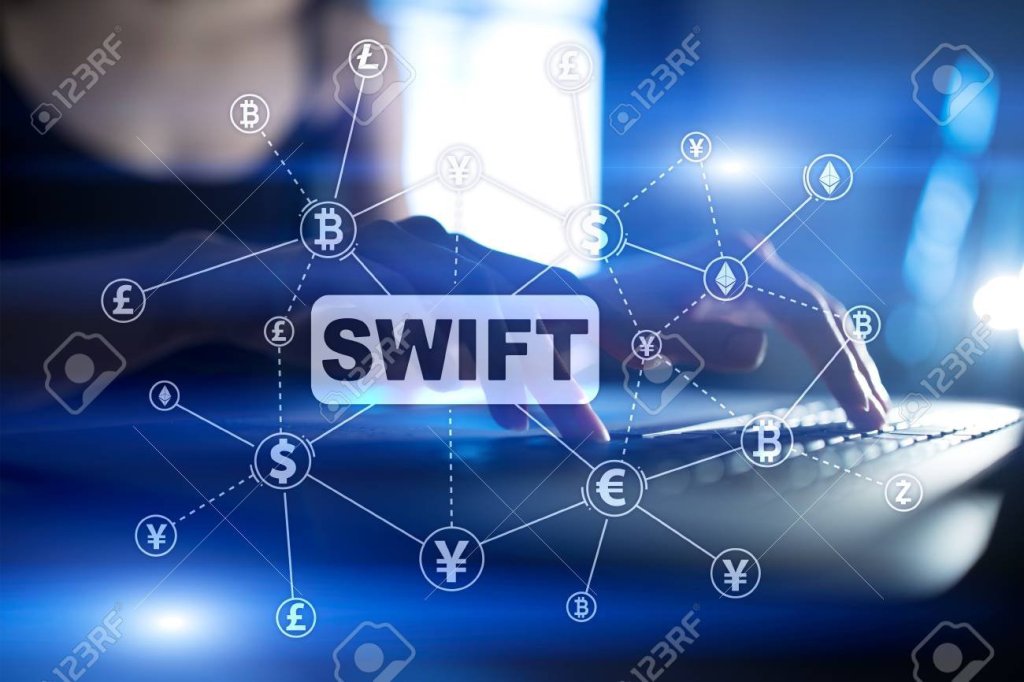
society for world wide inter bank financial telecommunication (swift) (image credit : google)
Society For Worldwide Inter Bank Financial Telecommunication (SWIFT)
SWIFT is the Society for Worldwide Interbank Financial Telecommunication, a member- owned cooperative through which the financial world conducts its business operations with speed, certainty and confidence. More than 10,800 banking organizations, securities institutions and corporate customers in over 200 countries trust SWIFT every day to exchange millions of standardized financial messages. Banks and financial institutions in India are part of the high security network -SWIFT. SWIFT is used for the transmission and receipt of all international financial messages by member banks and financial institutions. As per rough estimate half of the world’s transactions are made through net work. SWIFT enables its customers to automate and standardize financial transactions, thereby lowering costs, reducing operational risk and eliminating inefficiencies from their operations. By using SWIFT customers can also create new business opportunities and revenue streams. SWIFT does not facilitate funds transfer, rather, it sends payment orders, which must be settled via correspondent accounts that the institutions have with each other. Each financial institution, to exchange banking transactions, must have a banking relationship by either being a bank or affiliating itself with one (or more) so as to enjoy those particular business features. The SWIFT community includes a variety of financial services firms, including banks, broker/dealers, and investment managers, as well as their market infrastructures in payments, securities, treasury, and trade.
The banker opens a current and savings account for a customer. At that time, the customer is provided with a cheque book for operating his account. A cheque book contains 10 or 20 printed blank cheque leaves serially numbered. Customers are required to make use of these printed forms for drawing cheques. This practice helps the cheque to become safer. It also provides uniformity to cheques. Cheques are used to withdraw money from current and savings bank account. A cheque is a negotiable instrument. A negotiable instrument is transferable either by mere delivery or by endorsement and delivery. It gives a good and absolute title to the transferee who takes it good faith and for value and with out notice to the fact that any defect is existed in the title of the transferor Originally Section 6 of the Negotiable Instrument Act 1881 defined a cheque as “a bill of exchange drawn on a specified banker and not expressed to be payable otherwise on demand”. This section has been amended in September 2002 to include truncated cheques and electronic cheques within the definition of cheques. As per the amended section 6, “A cheques is a bill of exchange drawn on a specified banker and not expressed to be payable otherwise than on demand and it includes the electronic image of a truncated cheques and a cheques in the electronic form”.
Therefore a cheque is a bill of exchange with two additional qualifications namely:
1.A cheque is always drawn on a specified banker. 2.It is always payable on demand.
Apart from this a cheque involves Electronic cheque a Truncated Cheque
Drawee is buyer of the goods upon whom the bill of exchange is drawn. If the drawee is ready to make payment on due date, he has to write the word “accepted” in the bill and put his signatures on it. After writing the word ‘accepted’ and putting signature, the drawee of the bill is known as acceptor. This process is called acceptance. After acceptance, the bill becomes a valid legal document. The drawee is required to honour the bill on due date. There are two types of acceptance namely General acceptance and qualified acceptance. The general acceptance requires signatures of the acceptor only without stating any conditions, thereto. However, mention of a bank or a specified place of payment or part payment thereof, makes the acceptance qualified. A qualified acceptance varies the express terms of the bill as originally drawn and thereby the drawer can refuse to consider the bill as accepted. Sometimes the bill of exchange may be accepted by another person on behalf of the drawee. For example a bill of exchange drawn by Sathar up on Roopesh may be accepted by Wilson.
parties to a bill of exchange (image credit : google)
Bill of Exchange (BOE) :- A bill of exchange is a written acknowledgement of the debt, written by the creditor and accepted by the debtor.) It is called a draft before its acceptance. Therefore, one of the underlying features of a bill of exchange is that it has to be accepted either by the person upon whom it is drawn or by someone else on his/her behalf.
Parties to a Bills of Exchange
Usually there are three parties to a bill of exchange Drawer,Drawee and Payee.
Drawer : Drawer is the maker of the bill of exchange. A seller/creditor who is entitled to receive money from the debtor can draw a bill of exchange upon the buyer/ debtor. After writing the bill of exchange the drawer is required to sign the bill as maker of the bill.
Drawee : Drawee is the person upon whom the bill of exchange is drawn.
Payee : Payee is the person to whom the payment is made. The drawer of the bill himself will be the payee if he keeps the bill with him till the date of its payment. The payee may change in the following situations. 1.In case the drawer has got the bill discounted, the person who has discounted the bill will become the payee; 2.In case the bill is transferred in favour of a creditor of the drawer then the creditor will become the payee. Normally. the drawer and the payee is the same person. Similarly, the drawee and the acceptor is normally the same person.
Acceptor : The person who accepts the bill is known as the acceptor. Normally the drawee is the acceptor. But a stranger can also accept a bill on behalf of the drawee. Drawee of a bill of exchange accepts it by signing on face of the bill. He or she thereby accepts the liability for payment of the bill on or before the bill’s maturity date.
Endorser : When the holder transfers or endorses the instrument to any other person the holder becomes the Endorser.
The Endorsee : The person to whom the bill is endorsed is called the endorsee.
The Holder : Holder of bill of exchange means any person who is legally entitled to the possession of it and to receive or recover the amount due thereon from the parties. He is either the payee or the endorsee. The finder of a lost bill payable to bearer or a person in wrongful possession of such instrument is not a holder.
Drawee in case of need : When the bill or in any endorsement thereon the name of any person is given in addition to the drawee to be resorted to in case of need such person is called a “Drawee in case of need”. He is merely in the position of a drawee who has not accepted the bill. The bill cannot be presented to him for acceptance but only for payment.
Acceptor for Honour : Any person may voluntarily become a party to a bill as an acceptor by accepting it for the honour of the drawer or of any person. When the original drawee refuses to accept or refuses to furnish better security when demanded by a notary, any person may step in to safeguard the honor of the drawer or any endorser and bind himself by an acceptance. The effect of such acceptance is that the bill is treated as alive and is not considered to be dishonored till it is dishonored by the acceptor for honour.
classification of bill of exchange (image credit : google)
Bill of Exchange (BOE)
As per Section 5 a bill of exchange” is “an instrument in writing containing an unconditional order, signed by the maker, directing a certain person to pay a certain sum of money only to, or to the order of, a certain person or to the bearer of the instrument.”
Classification of bill of exchange
On the basis of period bills are of two types: 1.Demand bills and 2.Term bills
Demand Bills of Exchange: There is no fixed date for the payment of such bill. They become payable at any time, when they are presented before payee by the holder.
Term Bills of Exchange: These bills are payable after specified period of time. The period after which these bills become due for payment is called tenor.On the basis of purpose of writing the bills, the bills can be classified as: Trade Bills. Accommodation Bills. Trade Bills: These bills are drawn and accepted against the sale and purchase of goods on credit. These are drawn by the seller (creditor) and accepted by the buyer (debtor). Accommodation Bills: Such bills do not involve any sale and purchase of goods: rather they are drawn without any consideration. The purpose of such bills is to help one party or both the parties financially. The bills can be further classified into two classes given as under: Inland Bill : These bills are drawn in a country upon person living in the same country or made payable in the same country. Both drawer and the drawee reside in the same country. Foreign Bills : These bills are drawn in one country and accepted and payable in another country, eg. a bill drawn in England and accepted and payable in India.





You must be logged in to post a comment.